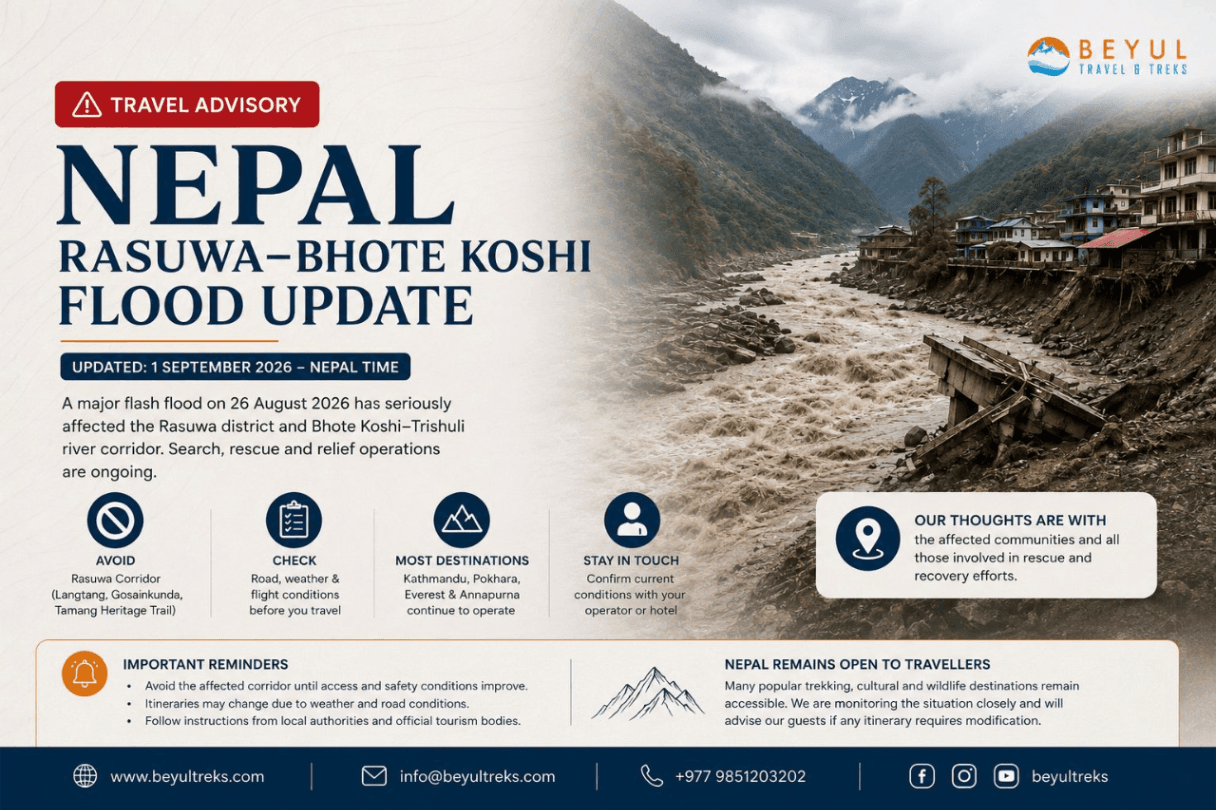
Nepal Travel Advisory: Rasuwa–Bhote Koshi Flood Update
UPDATED: 1 SEPTEMBER 2026 — NEPAL TIME
A major flash flood struck Nepal’s Rasuwa district on 26 August 2026, sending a powerful surge of water, sediment, and debris through the Bhote Koshi and Trishuli river corridors. Preliminary assessments indicate that the flooding was associated with an upstream high-altitude ice avalanche and sudden water release near the Nepal–China border.
The disaster has caused significant damage to communities, roads, bridges, hydropower infrastructure, and other facilities along the affected corridor. Search, rescue, recovery, and relief operations remain ongoing, and access to several areas continues to be restricted.
Current Situation
The Rasuwa–Bhote Koshi–Trishuli corridor remains seriously affected. Travellers should avoid non-essential travel to affected areas until local authorities and travel operators confirm that routes and services are safe and operational.
Travel Advice
For the time being, travellers should avoid travelling into or through the affected Rasuwa corridor, including:
- Langtang Valley
- Gosaikunda
- Tamang Heritage Trail
- Syabrubesi
- Timure and Rasuwagadhi
- Manaslu trek via Dhading
Roads, bridges, and local infrastructure in parts of the region have been damaged, and conditions can change rapidly during the monsoon season.
What About Other Tourist Destinations?
The disaster is geographically concentrated, and many of Nepal’s major tourism destinations continue to operate. However, conditions can vary by location, particularly during the monsoon, so travellers should confirm current road, weather, and flight conditions before departure.
Kathmandu, Pokhara, Everest, Annapurna are outside the main Rasuwa flood-affected corridor and continue to receive travellers. Nevertheless, access routes and domestic flights can be affected independently by monsoon weather.
Chitwan requires particular attention. Although it is far downstream from Rasuwa, parts of Chitwan have also experienced impacts from the wider flood event. Travellers planning to visit Chitwan should confirm the latest local conditions directly with their hotel or travel operator before travelling.
What This Means for Travellers
- Avoid the affected Rasuwa corridor until access and safety conditions improve.
- Do not travel to Langtang, Gosaikunda, or the Tamang Heritage Trail without confirmation from local authorities or your trekking operator.
- Check road conditions before travelling overland, particularly during the monsoon.
- Allow flexibility in your itinerary, as weather-related road closures and flight delays can occur independently of the flood.
- Confirm conditions with your hotel, trekking agency, or tour operator shortly before travelling.
- Follow instructions issued by local authorities, security agencies, and official tourism bodies.
Nepal Remains Open to Travellers
Nepal is a geographically diverse country, and the current disaster does not mean that all tourism destinations in Nepal are affected. Many popular trekking, cultural, and wildlife destinations remain accessible.
At Beyul Travel & Treks, we are closely monitoring the situation and continue to assess routes based on safety, accessibility, and official local information. We will advise our guests promptly if any itinerary requires modification.
For travellers currently planning a trip to Nepal, we strongly recommend checking the latest conditions with your travel operator before departure and remaining flexible during the monsoon season.
Our thoughts are with the affected communities, families, and everyone involved in the ongoing rescue and recovery efforts.